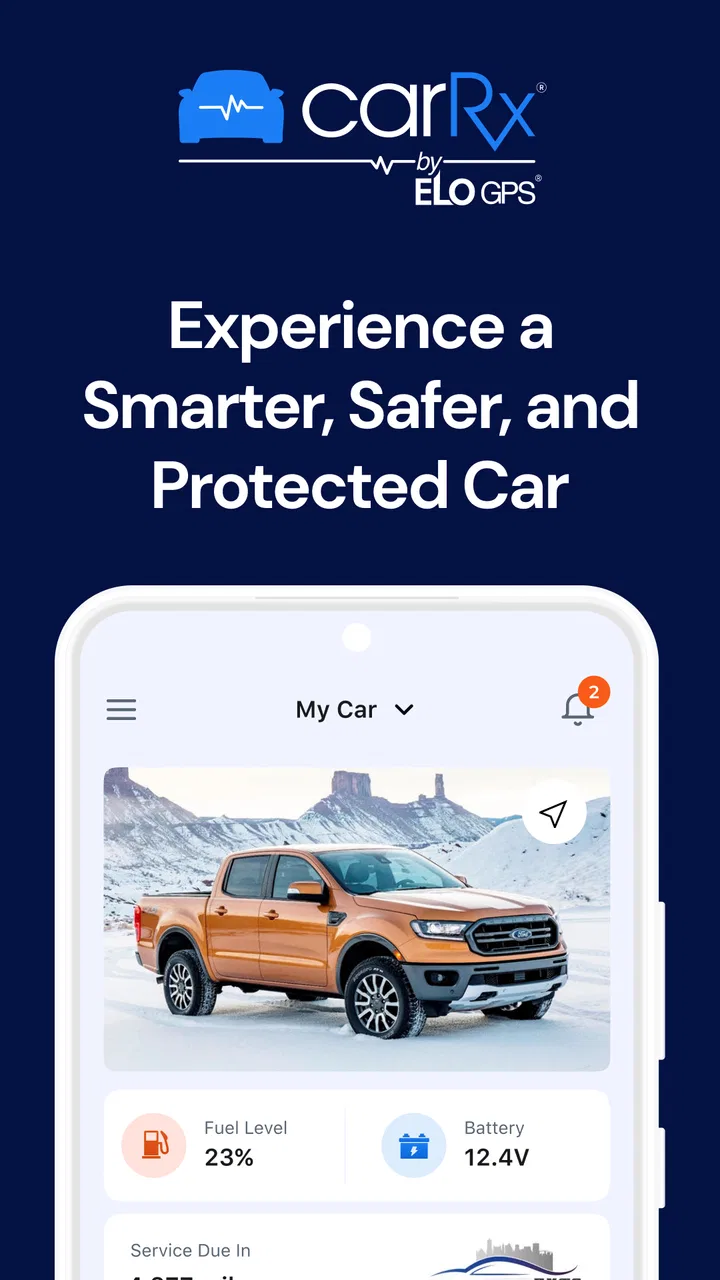
CarRx by Elo GPS
- 4.6
- Rating
- 10.00K
- Installs
- Free
- Price

 Analysis by App-foxy
I approached CarRx as the kind of app you open when your car matters more than another item on a phone screen. Developed by Connected Dealer Services, LLC, this free Auto & Vehicles app presents itself as a companion for a “smarter, safer and protected car,” with the short store description “CarRx.” That wording is broad, so the useful question is whether it feels practical in daily ownership rather than merely reassuring.
My overall impression is positive but measured. CarRx is best understood as a vehicle-focused tool for people who want car-related information and protection features gathered in one place, instead of relying entirely on memory, paper records, or several unrelated services. It is available to everyone by age rating, works on Android seven and later, and its current version is 3.3.1. The app is free, which makes it easy to try without turning the decision into a financial commitment.
It has an average rating of 4.4 from around 170 ratings, alongside more than 40 written reviews, and has passed 10 thousand installs. Those figures suggest a small but established user base rather than a huge mainstream platform. I would treat that as a reason to test it with your own vehicle and routine, not as proof that it will suit every driver.
You May Also Like

 Blood Strike: 2.5 Anniversary
Blood Strike’s Loadouts Turn Every Drop Into a Tactical Gamble
A close look at Blood Strike’s custom loadouts: how fast access to signature weapons reshapes its battle royale rhythm, rewards preparation, and narrows the gap between fights.

 Pandora - Music & Podcasts
Pandora’s Music Is Easy to Start, but Harder to Recover
Pandora’s strength is its low-effort path from a seed to a station. Its weak spot is how much confidence it asks you to place in connection, setup, and quiet recovery.

 8 Ball Pool
 Is Built on Rivalries, Rematches, and Routine
A close look at the rivalries, rematches, shared routines, and unanswered safety questions that turn a quick pool match into a persistent mobile community.

 Samsung Music
’s Quiet Strength Is Playing What You Already Own
Its reach comes less from spectacle than from dependable access to a personal library. That simplicity is both the app’s strongest retention engine and its ceiling.

 AccuWeather: Weather Radar
AccuWeather Review: A Quick, Clear Forecast for Everyday Decisions
For everyday plans, the best forecast is the one you can understand quickly. AccuWeather makes rain timing, radar, and local conditions easy to act on, with a few trade-offs.

 Hill Climb Racing
Why Hill Climb Racing Still Turns Crashes Into One More Run
A tiny car, a bumpy hill and one more upgrade: Hill Climb Racing keeps resurfacing because its simple chaos makes every near-miss feel personal.
More From Our News Desk
View All News


How CarRx fits into everyday car ownership
I see CarRx as a practical companion for the parts of car ownership that are easy to lose track of between errands, service visits, and everyday driving. Its value depends less on installing it than on whether it gives you a natural place to return when a vehicle question comes up. That makes the next point important: what you can actually check and control inside the app.
A calmer starting point than scattered car information
The strongest idea behind CarRx is concentration. Car ownership often spreads information across a glove-box folder, a dealership conversation, a dashboard warning, a calendar reminder, and a phone note. A dedicated vehicle app can make that routine easier to follow because the car becomes the central subject instead of an afterthought inside a general note-taking app.
That distinction matters when you are busy. If you are preparing for a long drive, checking what needs attention before a service visit, or trying to keep track of protection-related details, an automotive app is more natural than searching through unrelated documents. I found the value less about entertainment and more about reducing the small amount of friction that causes drivers to postpone sensible car care.
There is also a useful psychological benefit. A general reminder app can tell me that I wrote something down, but it does not make the reminder feel connected to the vehicle. CarRx is aimed at that missing context. When a car-related task is presented as part of the car’s own record or protection routine, it is easier to treat it as something worth acting on rather than another notification to dismiss.
What I would do before relying on it
I would begin with one vehicle and one simple routine instead of trying to organize everything immediately. After installing CarRx, I would look through its main areas, identify where the car’s relevant information belongs, and then use it during the next real-world task: a service appointment, a protection check, or a trip preparation session. This approach quickly shows whether the app matches the way I actually manage a car.
That first session is also the right time to check whether the information I care about is easy to find. An app can be useful in theory but still feel slow in practice if important details are buried behind too many screens. My advice is to judge it by the number of steps needed for the actions you repeat, not by how polished the first screen looks.
A practical tip is to keep the app as a companion to existing records during the first few weeks. Do not immediately throw away paper documents or remove calendar reminders. Use CarRx alongside them until you have confirmed that its organization fits your habits. This is especially sensible for anything involving vehicle protection, maintenance decisions, or information you may need quickly away from home.
Speed expectations and the feeling of control
For this kind of app, perceived speed is not only about how quickly a screen appears. It is also about whether the next action is obvious. CarRx feels most useful when it lets me move directly from opening the app to the vehicle-related information I wanted. If I have to remember a complicated path every time, the benefit of having a dedicated car tool becomes smaller.
I would not choose CarRx because I expect it to replace every automotive service or provide the depth of a specialist diagnostic system. Its role is more approachable: give ordinary drivers a focused place to manage their relationship with a car. That means a short, clear workflow is more important than a long list of technical controls.
There is a trade-off here. A focused app can feel faster because it avoids the clutter of broader platforms, but it can also feel limited if your needs go beyond its intended scope. Someone who wants detailed mechanical readings, workshop-grade troubleshooting, or a complete financial record of ownership should compare it with dedicated alternatives. CarRx makes more sense for the everyday layer between “I should look after my car” and “I need a professional diagnostic tool.”
Heavy-use moments: when the app matters most
The most convincing use case is a busy day when several car decisions happen close together. Imagine getting ready for a weekend drive while also arranging a service visit. Instead of opening a notes app, searching old messages, and trying to remember what was discussed previously, I would use CarRx as the first place to organize the vehicle-related part of the task. That does not remove the need for a mechanic or official documentation, but it can make the preparation less scattered.
Another realistic situation is handing the car to someone else. A family member may need to understand the vehicle’s current status or know what should be checked before driving. A dedicated automotive record is more useful in that conversation than a long text thread mixed with unrelated messages. The benefit is not that CarRx magically solves communication; it is that the car has a clearer home for information.
Long trips are another test. Before leaving, I would use the app as part of a checklist rather than waiting for a warning or problem to force attention. That is an important distinction: CarRx is more valuable when used proactively. If I only open it after something goes wrong, I am asking it to be an emergency solution, while its stronger role is helping me stay organized before the emergency.
Heavy use may also expose the app’s limitations. People often need automotive information while standing outside the car, speaking with a service adviser, or dealing with a stressful interruption. In those moments, extra taps, unclear labels, or a delay in loading become more noticeable than they would at home. I would therefore spend a few minutes learning the layout before depending on it during a time-sensitive situation.
Reliability, stability, and recovery habits
Reliability for a vehicle app means more than avoiding crashes. I want confidence that the information I entered remains available, that the app opens consistently when I need it, and that I can recover from an interrupted session without losing track of what I was doing. CarRx’s value depends on that continuity because an automotive record is only helpful if I trust it enough to consult regularly.
I would build a simple recovery habit around it. After adding important information or completing a meaningful update, I would close and reopen the relevant area later to make sure I can find it again. This is not a criticism unique to CarRx; it is a sensible check for any app that becomes part of a personal record. It also helps reveal whether the organization feels natural before the amount of information grows.
Phone interruptions are another realistic test. A call from a repair shop, a weak connection, or switching briefly to another app can break a workflow. When I use CarRx for an important task, I prefer to finish one small action at a time rather than leaving a half-completed update open. That habit reduces the chance of confusion and makes recovery easier if I am interrupted.
I would also avoid treating the app as the only copy of information that has legal, financial, or service importance. CarRx can support organization, but official invoices, warranty documents, and professional advice still deserve their own safe storage. The app is most reliable as a convenient working reference, not as a reason to abandon every other record.
Device constraints and practical expectations
CarRx supports Android seven and later, so compatibility is reasonably broad for Android users with older phones. Still, compatibility on paper does not guarantee an identical experience on every device. Screen size, available storage, background activity, and the general condition of the phone can affect how comfortable any app feels, especially when it is used beside navigation, calls, or other vehicle-related tools.
On an older device, I would pay attention to how quickly CarRx returns after being pushed into the background. A phone with limited available resources may reload an app rather than keeping its previous screen ready. That does not necessarily mean the app is unstable, but it can make a multi-step task feel less fluid. My practical solution would be to avoid starting a complicated update while several demanding apps are open.
Battery and mobile data are also part of the ownership experience, even when an app is not used continuously. I would not leave any car app running unnecessarily while driving. Open it when parked, complete the task, and close it if there is no reason to keep it active. This is safer behavior and makes it easier to judge the app on its actual purpose rather than on background activity.
People using iPhones should check the relevant availability and compatibility before planning their workflow around CarRx. The confirmed Android requirement gives a clear starting point for Android owners, while device-specific behavior still depends on the phone. In either case, I would install it on the device I normally carry, not an old spare, because the app’s usefulness depends on being available when a car-related question comes up.
Where it beats ordinary alternatives
The usual alternative is a mixture of calendar reminders, phone notes, email searches, and paper documents. That combination is flexible, but it lacks a single automotive context. A calendar can remind me about a date, while a note can store a sentence, yet neither is designed around the ongoing relationship between a driver and a vehicle. CarRx’s advantage is the attempt to make that relationship the organizing principle.
It can also be more approachable than technical automotive software. Specialist tools are valuable for drivers who understand diagnostic data or want deep mechanical detail, but they may be excessive for someone who mainly wants a clearer ownership routine. CarRx is aimed closer to the ordinary driver who wants protection and car information to feel more manageable.
On the other hand, general tools remain better in some situations. A calendar is still superior for appointments shared with other people. Cloud document storage is better for preserving scans and official files. A mechanic’s diagnostic equipment is better for identifying a fault. CarRx should complement those tools rather than pretend to replace them. The best setup may be a combination: CarRx for the vehicle-centered routine, a calendar for dates, and official records for documents.
Who should use it, and who should skip it
I would recommend trying CarRx if you own a car, prefer a dedicated place for vehicle-related information, and are willing to make it part of a routine. It is particularly suitable for drivers who often forget service details, share a vehicle with family, or want to approach protection and maintenance more deliberately. The free price lowers the barrier to testing that workflow.
It may also suit a new car owner who is still building habits. Rather than waiting until the vehicle has a long history, starting with an organized routine can make future information easier to follow. The important point is consistency: the app becomes more useful when I return to it before and after relevant events, not when I install it and leave it untouched.
I would skip it if I already have a system that I genuinely use and find easy. Adding another app only helps when it removes effort; if it creates duplicate entries or another place to check, it may make ownership more complicated. I would also look elsewhere if my main goal is advanced diagnostics, detailed repair analysis, or a full document-management system. Those are different needs from the focused role CarRx appears to serve.
My performance verdict after weighing the trade-offs
CarRx earns its place by focusing on a problem that is easy to underestimate: keeping car ownership information close, understandable, and actionable. I like the idea of using it before a service visit, before a trip, or whenever I need to turn vague concern into a practical next step. Its free availability and broad Android support make experimenting straightforward.
My reservation is about expectations. I would not judge it as a replacement for a mechanic, a diagnostic reader, a calendar, or official paperwork. Its success depends on whether its workflow is quicker and clearer than the scattered system it replaces. If it asks me to duplicate too much information, its advantage fades. If it gives my vehicle a dependable home for everyday attention, it becomes genuinely useful.
Connected Dealer Services, LLC has positioned this as an automotive companion rather than a general-purpose productivity tool, and that focus is the reason I would recommend giving it a fair trial. Start with one car, test it during a real service or travel-preparation task, and keep your official records available until the routine proves itself. The practical verdict is simple: CarRx is worth trying for organized, everyday vehicle care, but drivers with technical or document-heavy needs should pair it with more specialized tools.
For me, that balance makes the app easier to recommend honestly. It is not about promising that one phone app can solve every car problem. It is about creating a more deliberate habit around the vehicle I depend on. When that is the goal, CarRx feels like a sensible, low-risk addition to the Android toolkit, especially for someone who wants protection and car management to be less scattered.
FAQs for CarRx by Elo GPS
01What is CarRx by Elo GPS and how does it work?
CarRx by Elo GPS is an advanced vehicle tracking and diagnostic app designed to keep you informed about your car’s health and location. It uses GPS technology and connects with your vehicle's onboard diagnostics to provide real-time updates on location, engine performance, and maintenance alerts, ensuring peace of mind and optimal vehicle performance.
02Is CarRx compatible with all vehicles?
CarRx is compatible with most vehicles manufactured after 1996, as these models typically come equipped with an OBD-II port, which is required for the app to communicate with your car. However, it’s always best to check the specific compatibility of your vehicle model on the CarRx website or contact their support for confirmation.
03How does CarRx help with vehicle maintenance?
CarRx provides valuable insights into your vehicle’s health by monitoring engine diagnostics and alerting you to potential issues before they become serious. You receive notifications for routine maintenance, such as oil changes and tire rotations, as well as alerts for more critical issues, helping you maintain your vehicle efficiently and potentially saving on costly repairs.
04What are the privacy measures implemented by CarRx?
CarRx takes privacy seriously by using encryption to protect your data and ensuring that only authorized users can access your vehicle's information. The app does not share your location or diagnostic data with third parties without your consent, providing a secure experience while using the app's features.
05Can multiple users access the same vehicle information on CarRx?
Yes, CarRx allows multiple users to access the same vehicle information, which is ideal for families or businesses with shared vehicles. You can set up multiple user profiles and permissions, ensuring that everyone has the appropriate level of access to important vehicle data and updates.
Pros
- User-friendly interface for easy navigation.
- Real-time vehicle tracking and alerts.
- Comprehensive maintenance reminders.
- Secure data encryption for privacy.
- Detailed trip history and analytics.
Cons
- Requires a stable internet connection.
- Limited features in the free version.
- Occasional syncing delays reported.
- Battery drain if used continuously.
- Some features are region-specific.

CarRx by Elo GPS
Gallery